


The Rhythm You Can’t Escape: A Day in Havana
EN
I don’t remember the exact name of the street. I was somewhere in Old Havana, out looking for photo opportunities as the afternoon sun was getting heavy, baking the worn asphalt. I was chasing those little slices of life that make this city so photogenic, and then I heard it.
Music. Not background music, but loud, unapologetic salsa blasting from a portable speaker. I turned the corner and found a group of kids from a local dance school. They hadn't booked a stage or rented a studio. They had just taken over the sidewalk in front of an old building with peeling paint and started dancing.
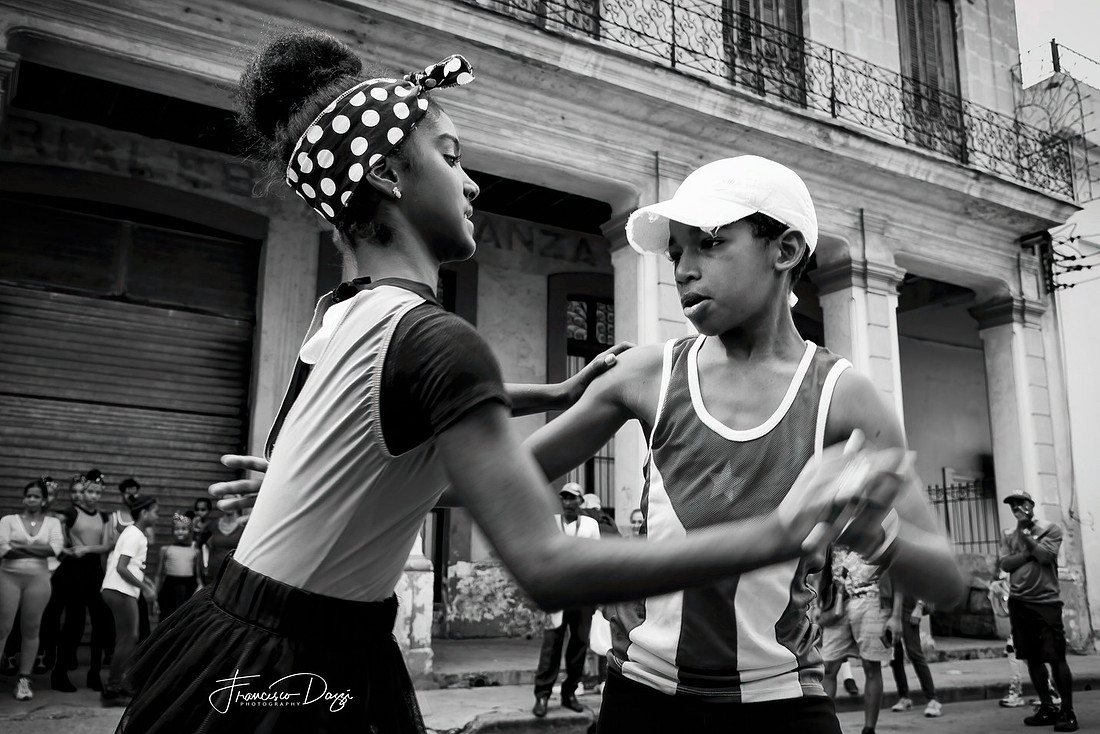
I ended up staying there for a long time. Just watching, trying to capture the moment. This black and white shot is my favorite from that afternoon. There’s this beautiful contrast between the two of them: the girl with her headscarf, completely focused and grounded, versus the boy in the white cap, who is pure motion. You can see the blur in his hands, right? That’s not a technical mistake. That’s the rhythm. Behind them, a few neighbors leaning against the walls, a rolled-up shutter, a building that has seen a hundred years of history. Just a normal day in Havana.
What really hits you about Cuba is that dancing isn't just an activity. It’s a language. It’s how people flirt, argue, and celebrate, all at once. You see it everywhere—on the doorsteps of houses, on the balconies, or right there on the street under the midday sun, when you’d think nobody would want to move a muscle.
For many Cubans, dancing is an escape, for sure. But it’s also the glue that holds the community together. When things are tough, when the daily grind is a struggle, there is always a beat coming out of a speaker. It’s a physical reminder that joy is an active choice. You don't wait for the perfect moment to dance; you just create it right there on the pavement.
Standing there with my camera, I felt like an intruder in the best way possible. I was just an observer, but they made me feel part of the vibe. I wanted to capture the calm in the girl's face against the blurred movement of the boy. Because to me, this is Cuba: ancient, crumbling architecture serving as the backdrop for the restless, beating pulse of its people. I stopped being a photographer for a minute and just let the music take over. Then I remembered I had a camera in my hands, and this is the result. A split second of connection, in black and white, on a street whose name I can't even recall.
IT
Non ricordo il nome esatto della via. Ero da qualche parte nell'Avana Vecchia, in giro a cercare occasioni fotografiche mentre il sole del pomeriggio iniziava a farsi pesante, scaldando l'asfalto consumato. Inseguivo quei piccoli spicchi di vita che rendono questa città così incredibilmente fotogenica, e poi l'ho sentita.
Musica. Non un sottofondo, ma una salsa sfacciata e potente che usciva a tutto volume da un altoparlante portatile. Ho girato l'angolo e ho trovato un gruppo di ragazzi di una scuola di ballo locale. Non avevano prenotato un palco o affittato una sala. Avevano semplicemente preso possesso del marciapiede davanti a un vecchio palazzo con la vernice che si sgretolava e avevano iniziato a ballare.
Alla fine sono rimasto lì un sacco di tempo. A guardare, a scattare. Questa foto in bianco e nero è la mia preferita di quel pomeriggio. C'è un contrasto bellissimo tra i due: la ragazza con il foulard in testa, concentrata e radicata a terra, contro il ragazzo con il cappellino bianco, che è pura energia e movimento. Vedi la sfocatura nelle sue mani, vero? Non è un errore tecnico; è il ritmo. Dietro di loro, qualche vicino appoggiato ai muri, una saracinesca abbassata, un edificio che ha visto cent'anni di storia. Un normalissimo giorno all'Avana.
La cosa che ti colpisce di Cuba è questa: il ballo non è un'attività. È un linguaggio. È il modo in cui la gente flirta, litiga e festeggia, tutto insieme. Lo vedi ovunque—sulla porta delle casas particulares, sui balconi, o in strada, sotto il sole a picco di mezzogiorno, quando penseresti che nessuno abbia voglia di muovere un muscolo.
Per molti cubani, ballare è una via di fuga, certo. Ma è anche la colla che tiene insieme la comunità. Quando la vita è dura, quando la giornata è una lotta, c'è sempre un beat che esce da un altoparlante. È un promemoria fisico che la gioia è una scelta attiva. Non aspetti il momento perfetto per ballare; lo crei tu, lì sul marciapiede.
Lì in piedi con la macchina fotografica, mi sentivo un intruso nel modo più bello possibile. Ero solo un osservatore, ma loro mi hanno fatto sentire parte della vibrazione. Volevo catturare la calma nel volto della ragazza contro il movimento sfocato delle mani del ragazzo. Perché per me, Cuba è questo: un'architettura antica e fatiscente che fa da sfondo al polso vibrante e irrequieto della sua gente. Ho smesso di fare il fotografo per un minuto e mi sono lasciato prendere dalla musica. Poi mi sono ricordato che avevo la macchina in mano e ho scattato. Questo è il risultato. Un centesimo di secondo di connessione, catturato in bianco e nero, in mezzo a una strada di cui non ricordo nemmeno il nome.
Nusfjord, Isole Lofoten
Nusfjord è un sorprendente villaggio di pescatori situato nell'isola di Flakstadøya, nell'arcipelago delle Lofoten, in Norvegia.
Le Lofoten sono considerate, a ragione, uno dei posti più belli del mondo da visitare, e quello che posso dire è che sono certamente il posto più bello della Norvegia. Gli scorci che si possono vedere sono di una bellezza incredibile e i villaggi sono perfettamente incastonati in uno scenario naturale incontaminato. Nusfjord fra questi villaggi è certamente unico perchè, oltre ad essere uno dei più antichi e meglio preservati, non è più abitato stabilmente, ma lo si può considerare ormai come un museo a "cielo aperto". Essenzialmente è composto da un porto molto piccolo, e da una serie di rorbu tradizionali, le caratteristiche casette rosse abitate un tempo dai pescatori.


Queste rorbu sono la caratteristica peculiare del villaggio. Per i turisti è possibile soggiornare in una di queste casette rosse, immaginando per un giorno di essere pescatori, anche se ormai non sono più spartane come quelle usate un tempo, ma sono dotate di ogni comodità.

Soggiornare quì è molto suggestivo, si può approfittare della pace e del silenzio che offrono questi luoghi, caratteristica ormai perduta nelle nostre caotiche città. Inoltre si è spettatori privilegiati dello spettacolo più bello del mondo: la natura.

Mandala
Se si è fortunati, durante un viaggio in Ladakh, può capitare di assistere alla creazione, da parte dei monaci, di un Mandala di sabbia.
Il Mandala (dal Sanscrito cerchio / ciclo) a prima vista sembra una composizione artistica, è disegnato con sabbie colorate ed è molto elaborato, con forme geometriche ripetute, e colpisce gli occhi prima che la mente.
Ma è soprattutto un simbolo spirituale che rappresenta, nel Buddhismo, l'universo, o meglio il processo di formazione dell'universo dal suo centro. Assume anche un forte significato rituale: la sua costruzione rappresenta uno spazio sacro dove è facilitata la meditazione e la concentrazione, e di conseguenza il distacco dal mondo materiale.
Però lo scopo finale della creazione di un Mandala di sabbia è la sua distruzione. Formato da milioni di granelli di sabbia colorata, necessita di molto tempo per essere completato, ma inesorabilmente verrà distrutto poco dopo la sua ultimazione. Perchè?
La distruzione del Mandala rappresenta il centro della filosofia buddhista: l'impermanenza di tutte le cose. Tutte le cose di questo mondo, non importa quanto siano belle o con che intenzioni vengano fatte, sono per loro natura sempre a rischio di essere spazzate vie in un istante. Ma la forza distruttrice è anche forza che dà la vita, la morte porta sempre con se anche il rinnovamento della vita.
Un Mandala nelle prime fasi della sua creazione, da parte dei monaci del monastero di Diskit, in Ladakh:


Il triciclo di Shinichi
Hiroshima, 6 Agosto 1945. Shinichi Tetsutani (3 anni e 11 mesi) amava andare su questo triciclo. Quella mattina, era in sella davanti alla sua casa, quando, in un lampo improvviso, è stato gravemente ustionato. È morto quella notte. Il padre pensava fosse troppo giovane per essere sepolto in una tomba solitaria lontano da casa, e pensando che potesse ancora giocare con il triciclo, seppellì Shinichi con il triciclo nel cortile di casa.
Nell'estate del 1985, quarant'anni dopo, il padre ha riesumato i resti di Shinichi e li ha trasferiti nella tomba di famiglia.
Questo triciclo e casco, dopo aver dormito per 40 anni nel cortile con Shinichi, sono stati donati al Museo della Pace di Hiroshima.

Surrealismo in Namibia
Non è la prima immagine dell'Africa a cui uno pensa, di solito il primato va ai safari, ma è in Africa che si trova uno dei posti più suggestivi del pianeta: il Dead Vlei.
Situato nella parte meridionale della Namibia, all'interno del Namib-Naukluft, fa parte della più vasta area chiamata Sossusvlei, e da solo vale il viaggio in questa remota area d'Africa. Era un oasi di acacie alimentata da un fiume che poi mutò il suo corso in seguito al movimento delle dune di sabbia da cui era circondata, trasformandosi in quello che si vede oggi: una vasta depressione dal fondo bianco, circondata da alte dune arancioni costellata da alberi morti di acacia dal tronco quasi nero.

Questi tre colori offrono un incredibile contrasto e gli alberi disegnano ombre gotiche sul fondo del vlei. Il silenzio totale completa l'esperienza sensoriale e spirituale intensa che questo luogo riesce ad offrire, favorendo l'immersione in una realtà peculiare che solo qui è possibile trovare.


Il bento (お弁当)
Nella società Giapponese è abbastanza comune vedere persone che durante la pausa pranzo oppure alla sera, ad esempio sul treno, mangiano il "bento".
Non si tratta di un alimento o di un tipo di cucina ma di una scatola con coperchio divisa in scomparti che separano i cibi differenti e che si presenta in varie forme e dimensioni, confezionato in maniera molto gradevole e che può contenere infinite combinazioni di cibo, con il riso comunque sempre presente. Si possono trovare nei "bento -shop" diffusi sopratutto nelle stazioni ferroviarie (in questo caso si chiama ekiben) e negli aeroporti, oppure nei negozi di quartiere (konbini) e nei supermercati. E' ancora comunque molto diffusa l'usanza di prepararlo a casa per poi consumarlo a scuola oppure in ufficio. Viene preparato con molta cura e dedizione, in modo da risultare prima di tutto gradevole e carino (kawaii) alla vista, specialmente quando è preparato per altre persone, in modo da dimostrare rispetto e sentimenti positivi verso l'altro. Assume quindi una forte valenza simbolica e comunicativa che va al di là del puro aspetto alimentare, e che, come quasi tutto in Giappone, deve farsi rappresentante dell'armonia, della pace e dell'equilibrio.
